





G 300 finely chopped mixed mushrooms (cremini, oyster, shiitake or wild mushrooms)
N 1 shallot, finely chopped
ML 125 dry white wine
N 2 thyme sprigsSalt and black pepper, to taste
ML 15 extra-virgin olive oil
A pinch of juniper
Caul fat, to wrap
N 1 roll of puff pastry
N 1 egg yolk mixed with ML 30 water, for brushing
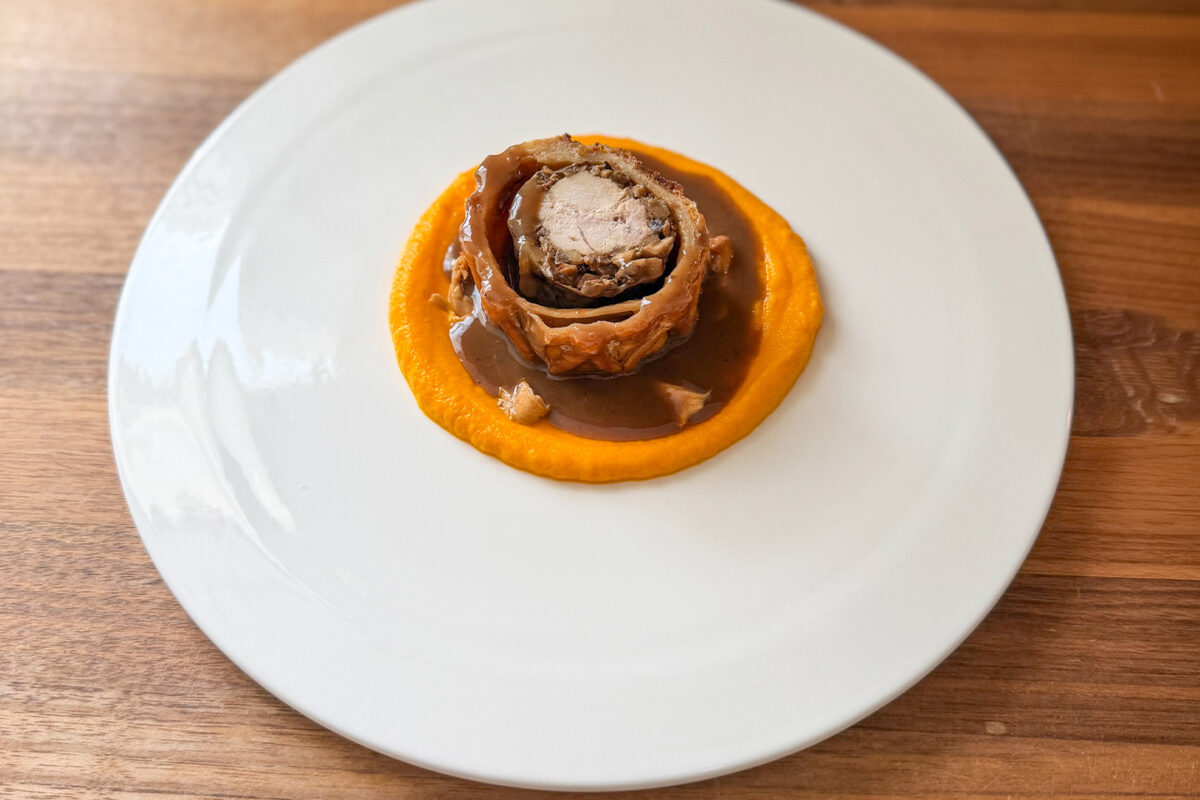
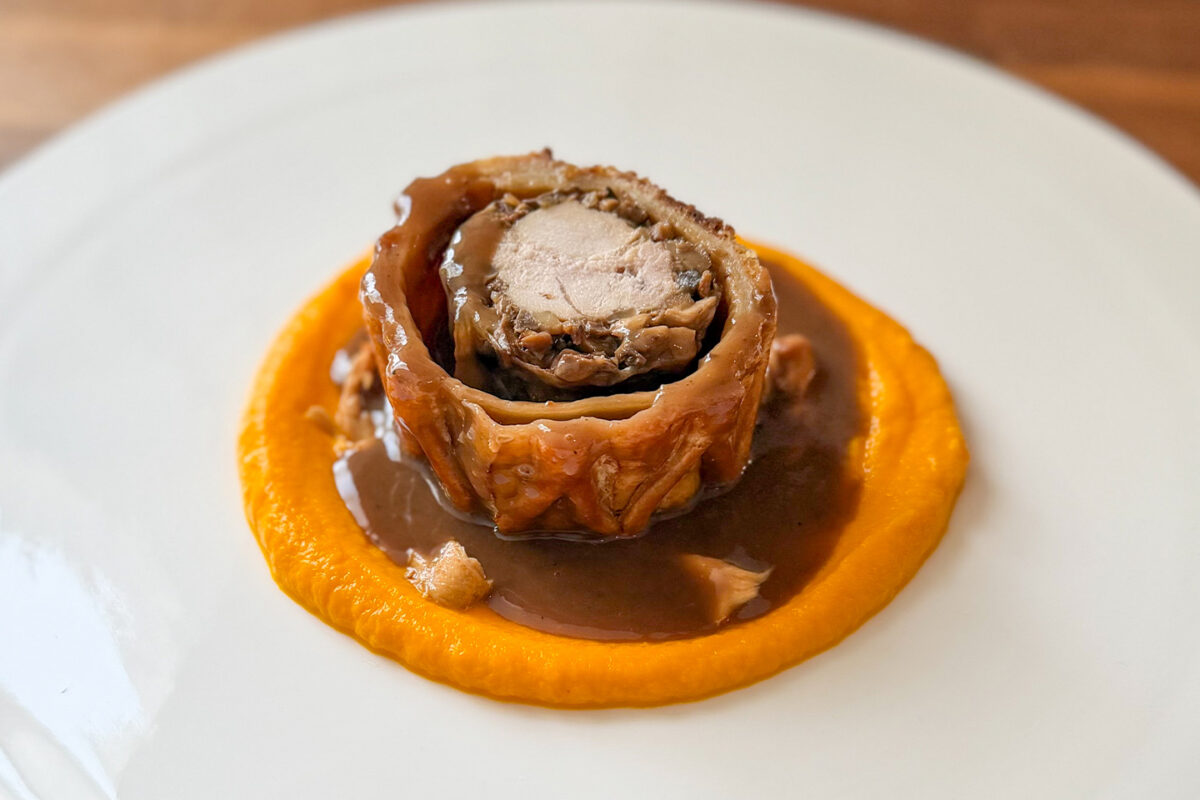
To finish: Carrot purée, to taste Reduced game sauce, to taste Sweet-and-sour mushrooms, to taste
For every hour of running at a medium-low speed (8 km/h), the AVERAGE caloric expenditure is 8 kcal per kg per hour.
*Assuming an average female weight of 60 kg and an average male weight of 80 kg.
Preparation
Heat a large frying pan over high heat and add the extra-virgin olive oil. Add the shallot, mushrooms, juniper and thyme, and sauté until well caramelised. Season with salt and black pepper. Stir from time to time and, when the mushrooms are dry and deeply golden, deglaze with the white wine and let the liquid reduce completely. Remove from the heat and chill in the refrigerator.
Lay the caul fat on a tray or work surface and spread the mushroom duxelles over half of its surface. Arrange the pheasant breasts in a line at one end, then roll them in the caul fat to form a tight cylinder. Compact the preparation further by wrapping it in foil lined with cling film, twisting the ends tightly to secure the shape. Leave to rest in the refrigerator for 30 minutes.
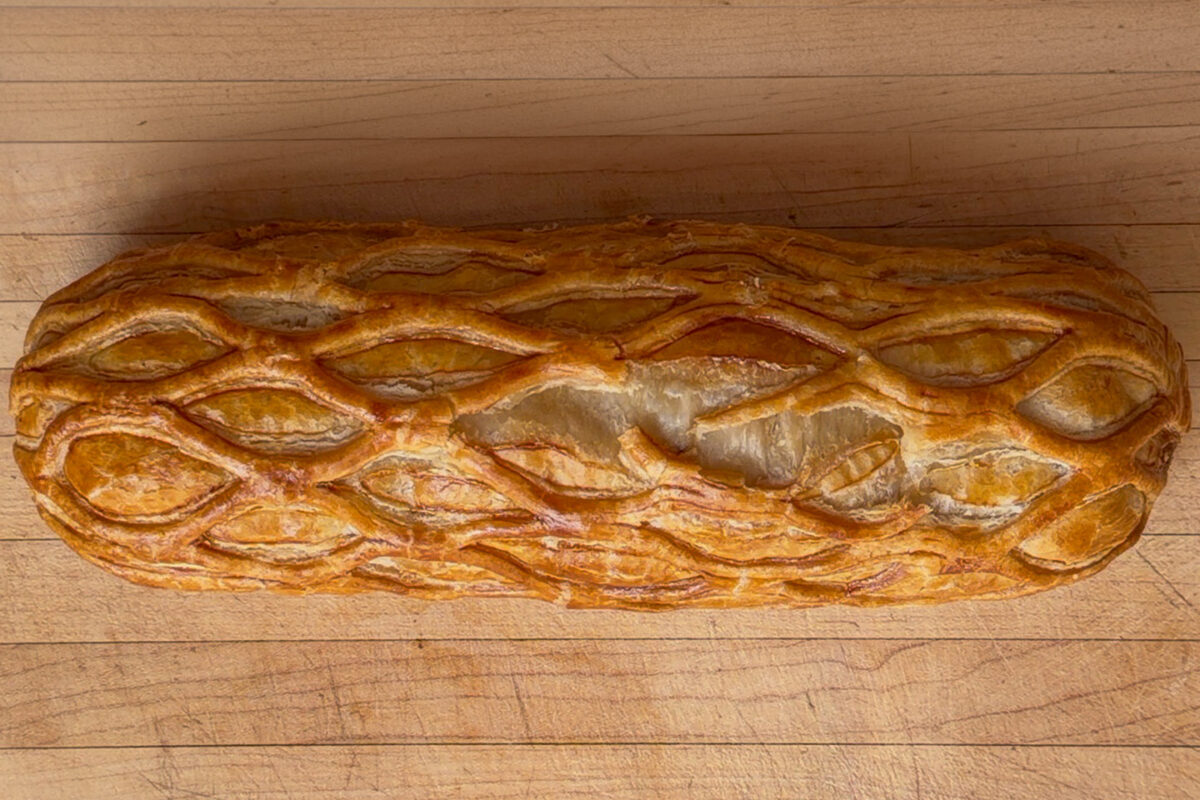
After resting, remove the foil and cling film and place the pheasant on the puff pastry. Wrap it carefully, trimming the pastry where the seam overlaps slightly. Fold in the ends and brush with the egg yolk and water mixture. Any pastry trimmings can be used for decoration or discarded.
Leave to rest again in the refrigerator for 30 minutes. Meanwhile, preheat the oven to 200°C / 392°F. Bake the Wellington for about 25 minutes, or until the pastry is deeply golden and the core temperature of the meat, measured with a probe thermometer, reaches 60–65°C / 140–149°F.
Serve with hot carrot purée, sweet-and-sour mushrooms and reduced game sauce.
Nota terminologica: ho tradotto “rete adiposa” come caul fat, che è il termine